
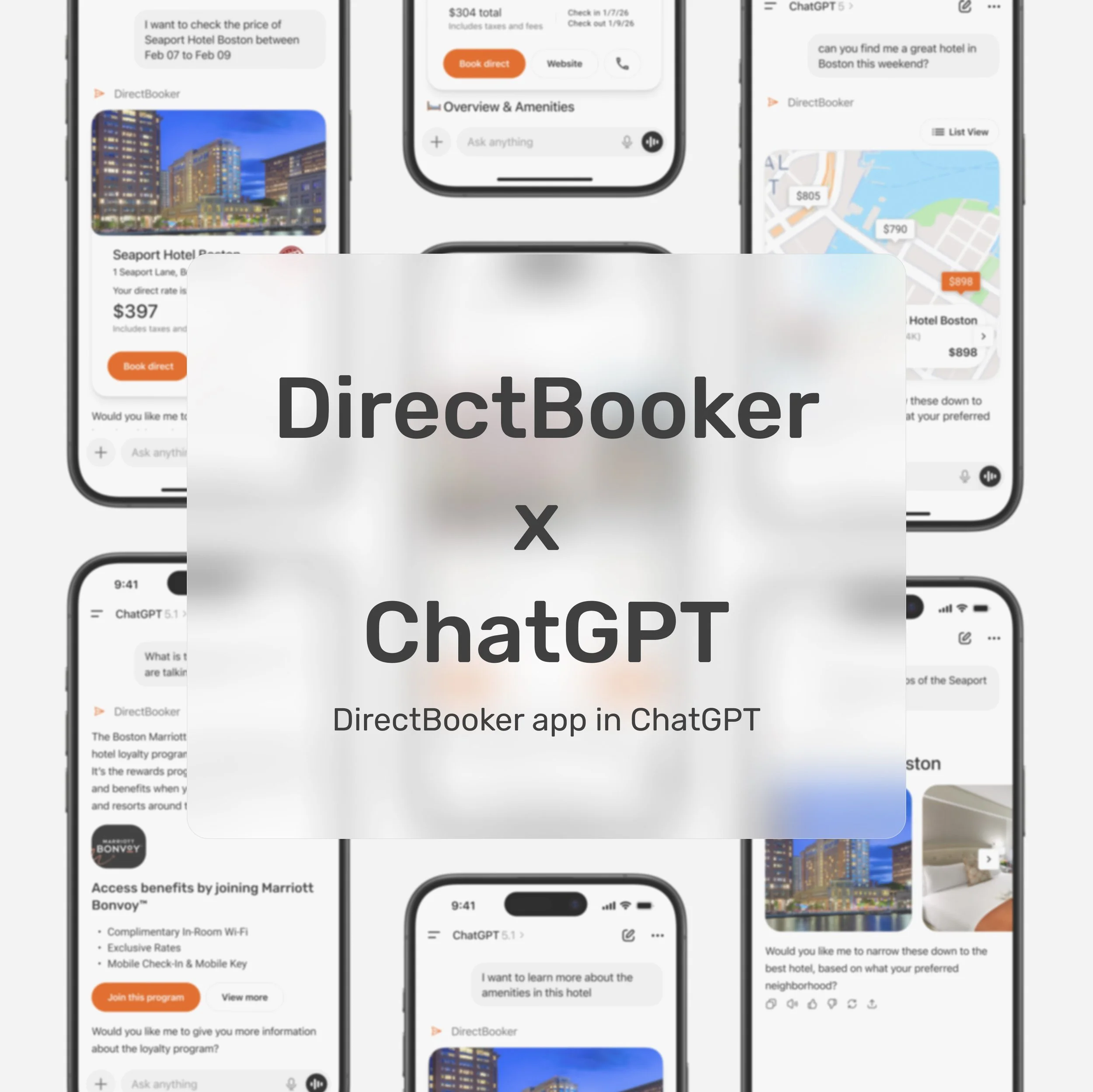
DirectBooker × ChatGPT
Designing a conversational hotel booking experience inside ChatGPT — surfacing direct prices, loyalty benefits, and exclusive perks at the exact moment of intent.
ROLE
Lead Product Designer
TIMELINE
2025 – Present
PLATFORM
ChatGPT Apps (MCP)
TEAM
Design · Eng · Product
A new surface for an old problem
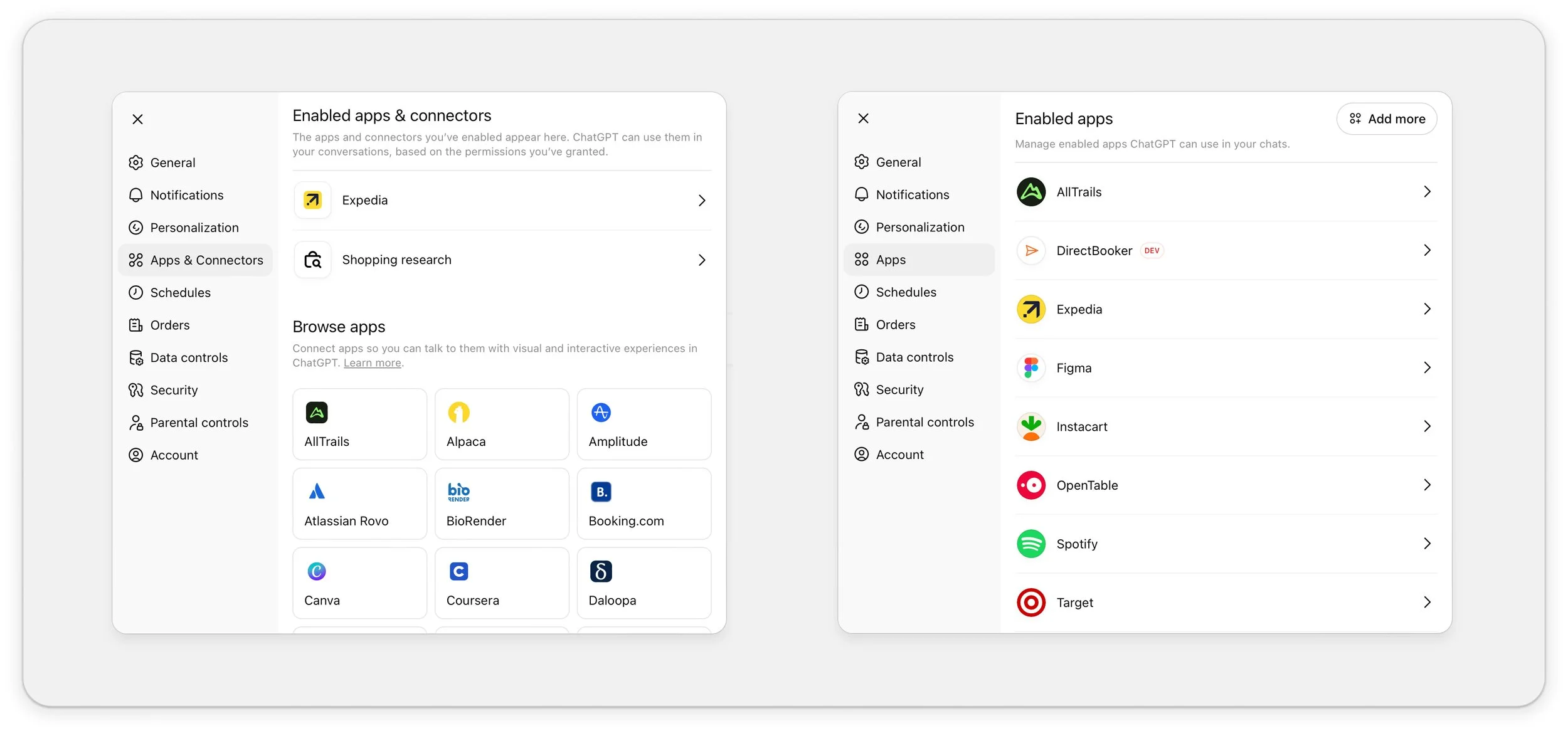
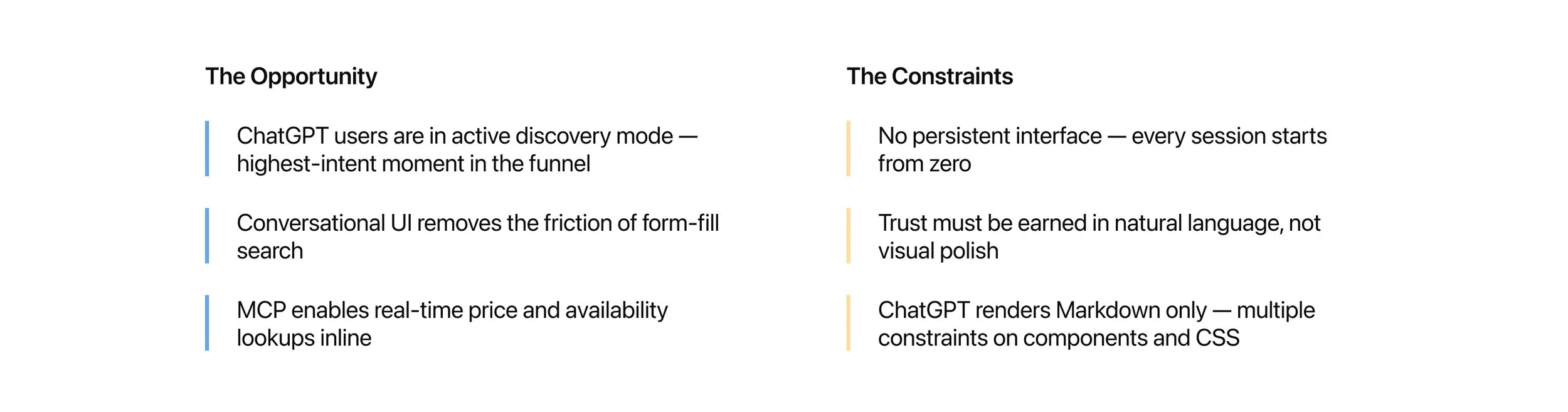
When OpenAI launched its Apps SDK and Model Context Protocol in October 2025, it opened a new distribution channel — one where users arrive with active, open-ended intent. Travel planning is a natural fit: most people begin with vague questions ("Where should I stay in Kyoto in May?") rather than rigid filter inputs.
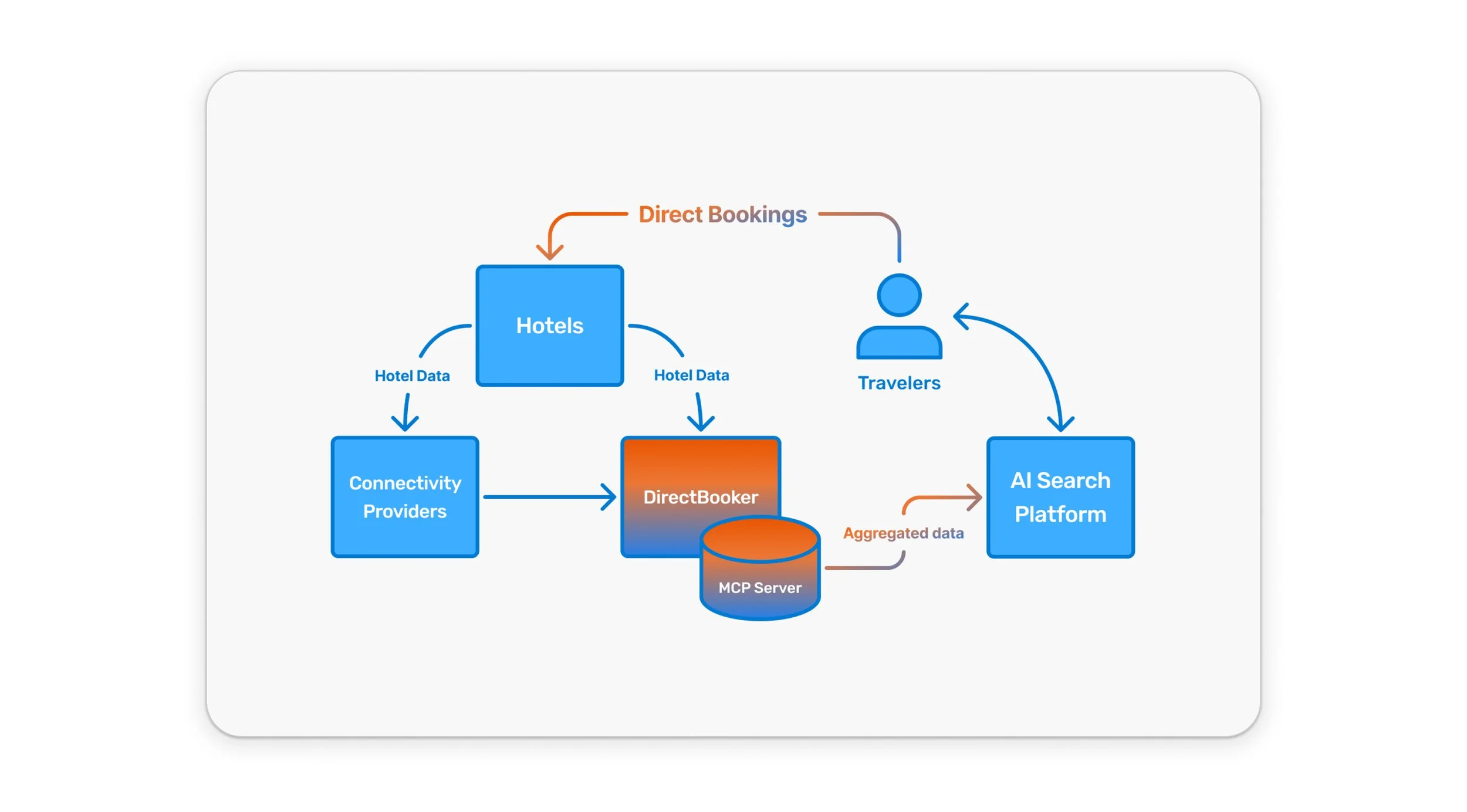
DirectBooker, as a platform that focused on restoring power to direct hotel bookings, saw an opportunity. OTAs dominate hotel discovery online — they obscure direct prices, hide loyalty tiers, and capture margin that could go back to travelers. The ChatGPT canvas offered a way to intercept users before they defaulted to Booking.com or Expedia.
How do you design a product that lives entirely within conversation — no persistent UI, no page navigation, just text and intent?
Problem & Goals
OTA algorithms are designed to maximize their own revenue, not the traveler's value. Direct booking benefits — better cancellation terms, loyalty points, room upgrades, breakfast perks — are invisible on aggregator pages. Most users don't know what they're missing.
Goals
Drive efficient hotel discovery through conversational AI
Surface direct prices, loyalty benefits, and exclusive perks at high-intent moments
Increase trust and conversion for direct bookings
Research - Understanding how travelers actually think
Before designing any flows, I ran a discovery sprint — competitive analysis, user interviews, and behavioral walkthroughs — to understand where OTA discovery breaks down and what conversational AI could uniquely address.
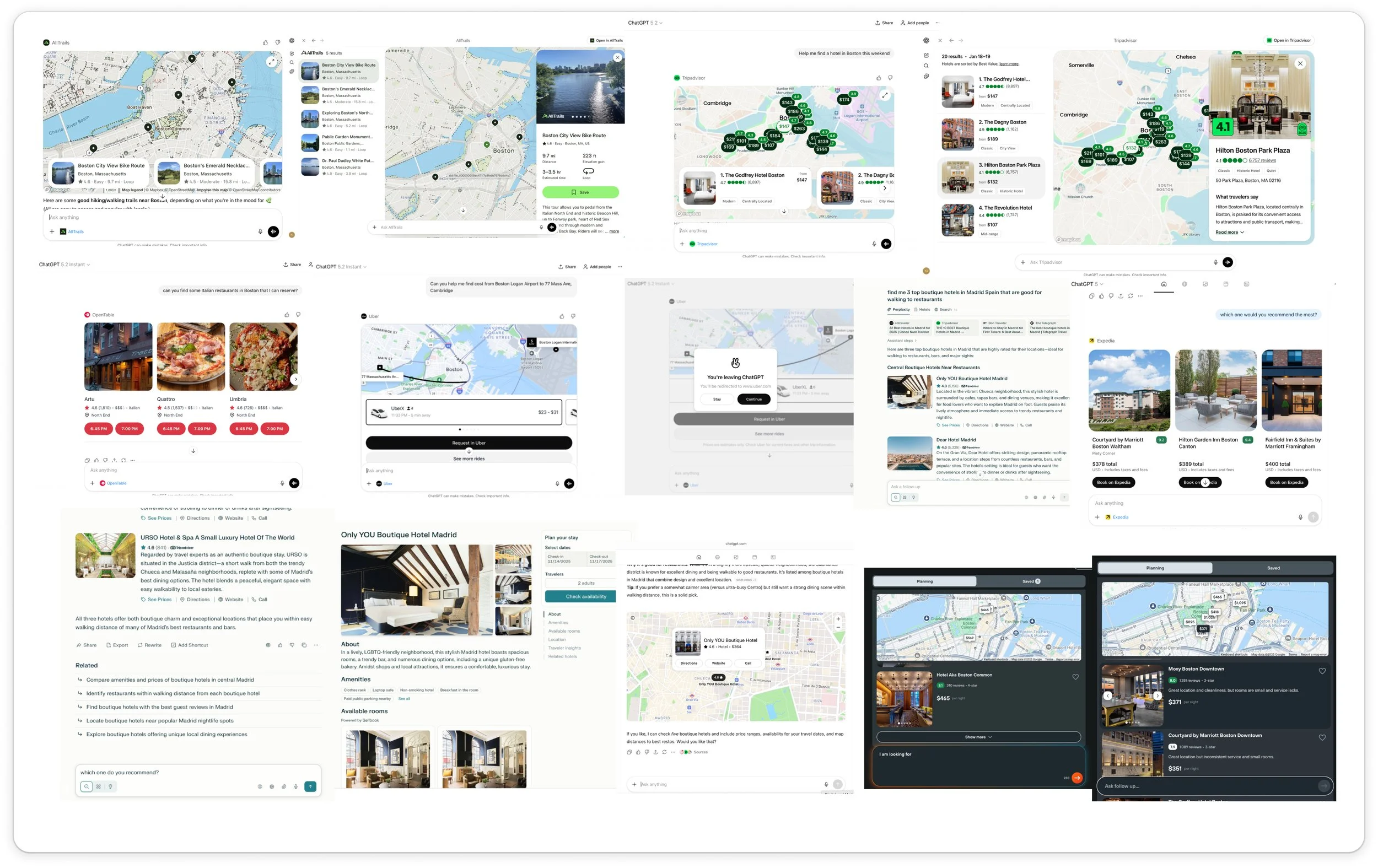
Analyzing product references from ChatGPT OTAs and Perplexity to inspire location-based features and search capabilities.
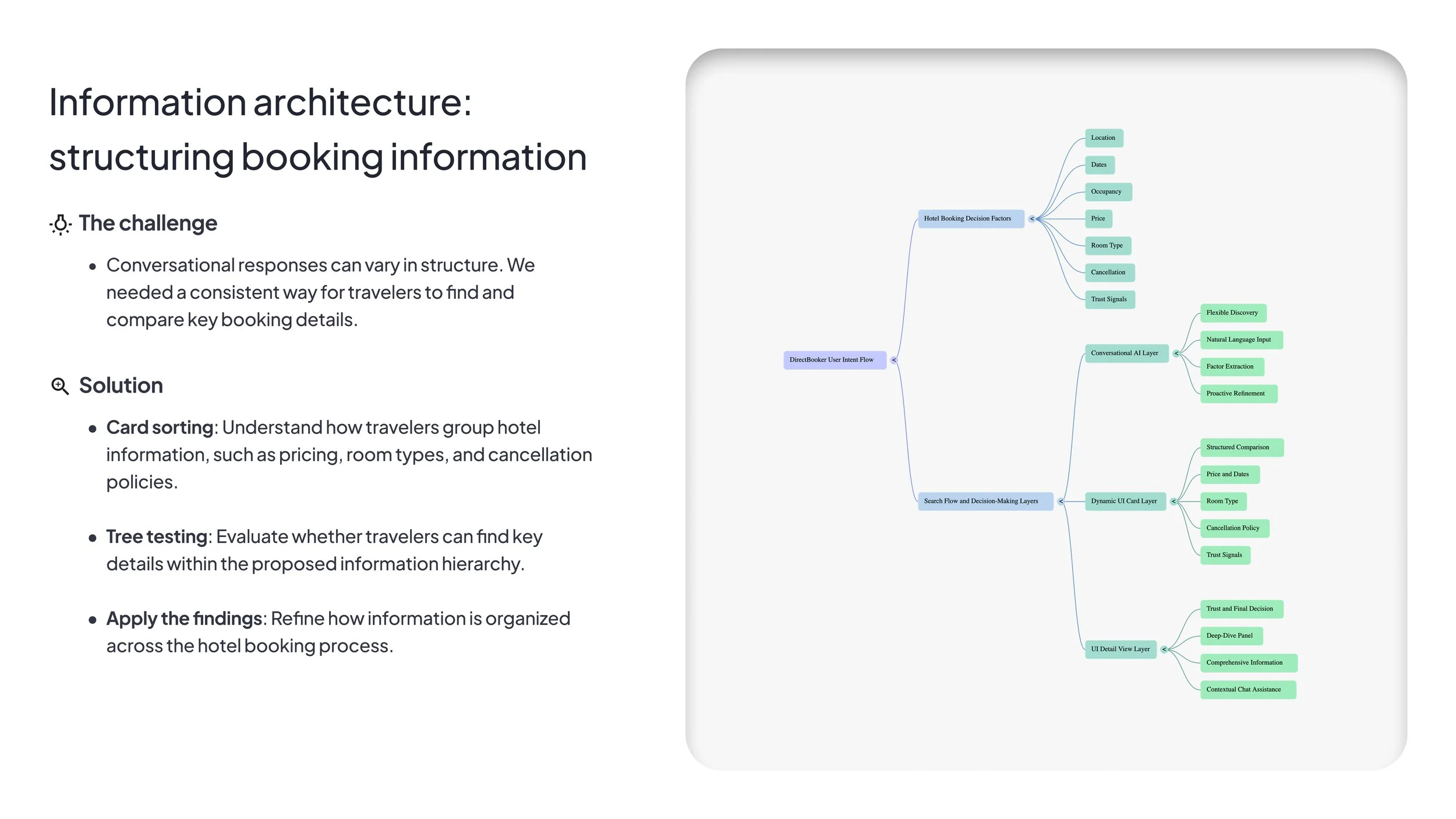
Use card sorting and tree testing to understand and evaluate how travellers search
Key Findings
Direct prices are invisible
Users didn't know direct prices are often equal or lower. They assumed OTAs had the best deals by default.
Intent-led discovery
Many users begin with intent-based queries (‘near xxx Park,’ ‘pet-friendly,’ ‘good for remote work’) instead of predefined filters.
Loyalty benefits are invisible
Users who belonged to hotel loyalty programs frequently didn't know how to apply benefits — especially at unfamiliar properties.
From vague intent to confident booking
The core design challenge was mapping the messy, nonlinear reality of travel planning onto a reliable, sequential conversational flow — without making it feel like a form disguised as a chat.
In a chat-native product, the words are the interface. I spent as much time on response structure, tone, and information hierarchy as I would on visual components in a traditional product.

Design system: adapting for a new surface
The core challenge was determining what to carry over: the full color palette was retained for brand recognition, while typography and components were rebuilt to align with ChatGPT's visual language. The result is a mini design system that keeps the branding of DirectBooker while feeling native to the platform.
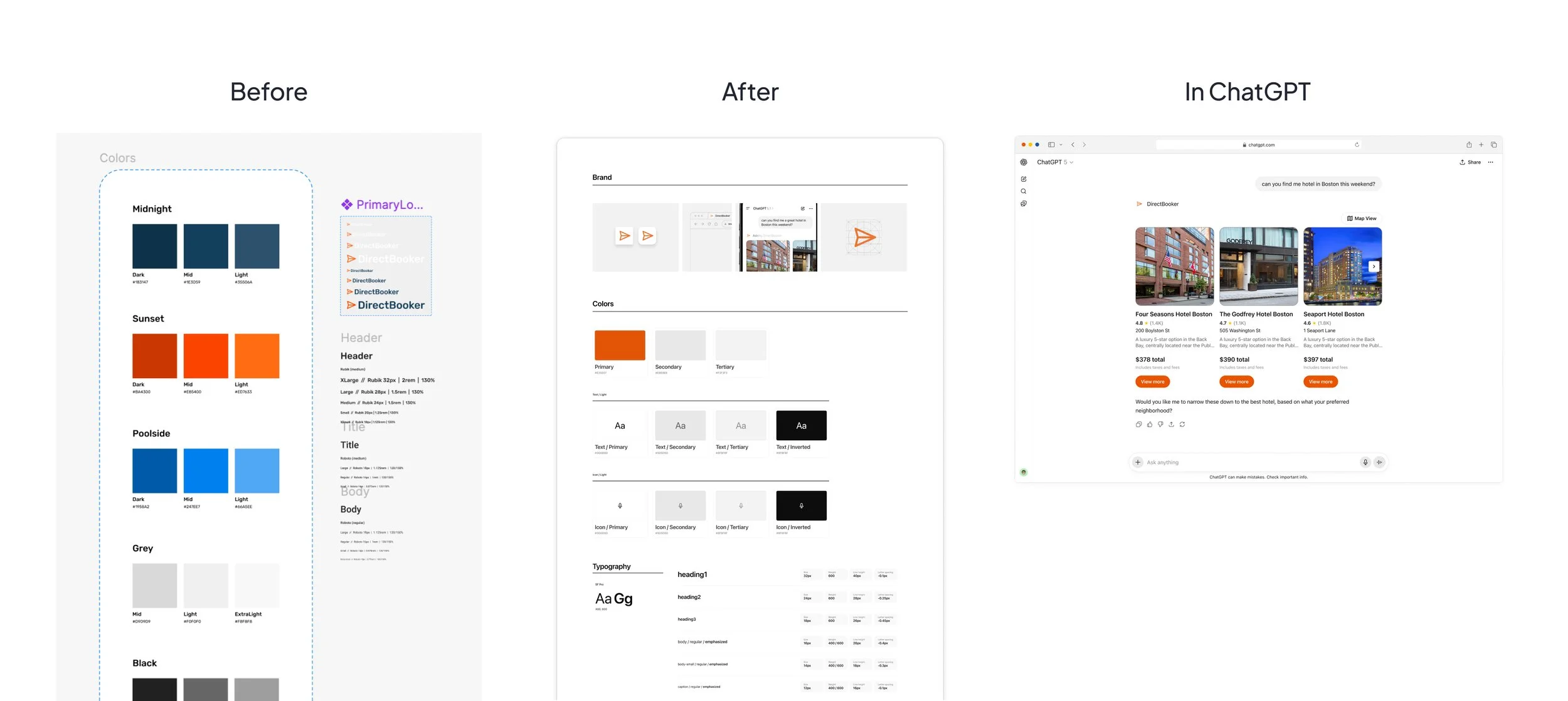
What we tried, what we cut
Not every approach made it to the final product. Here are three directions we explored and the rationale behind the decisions.
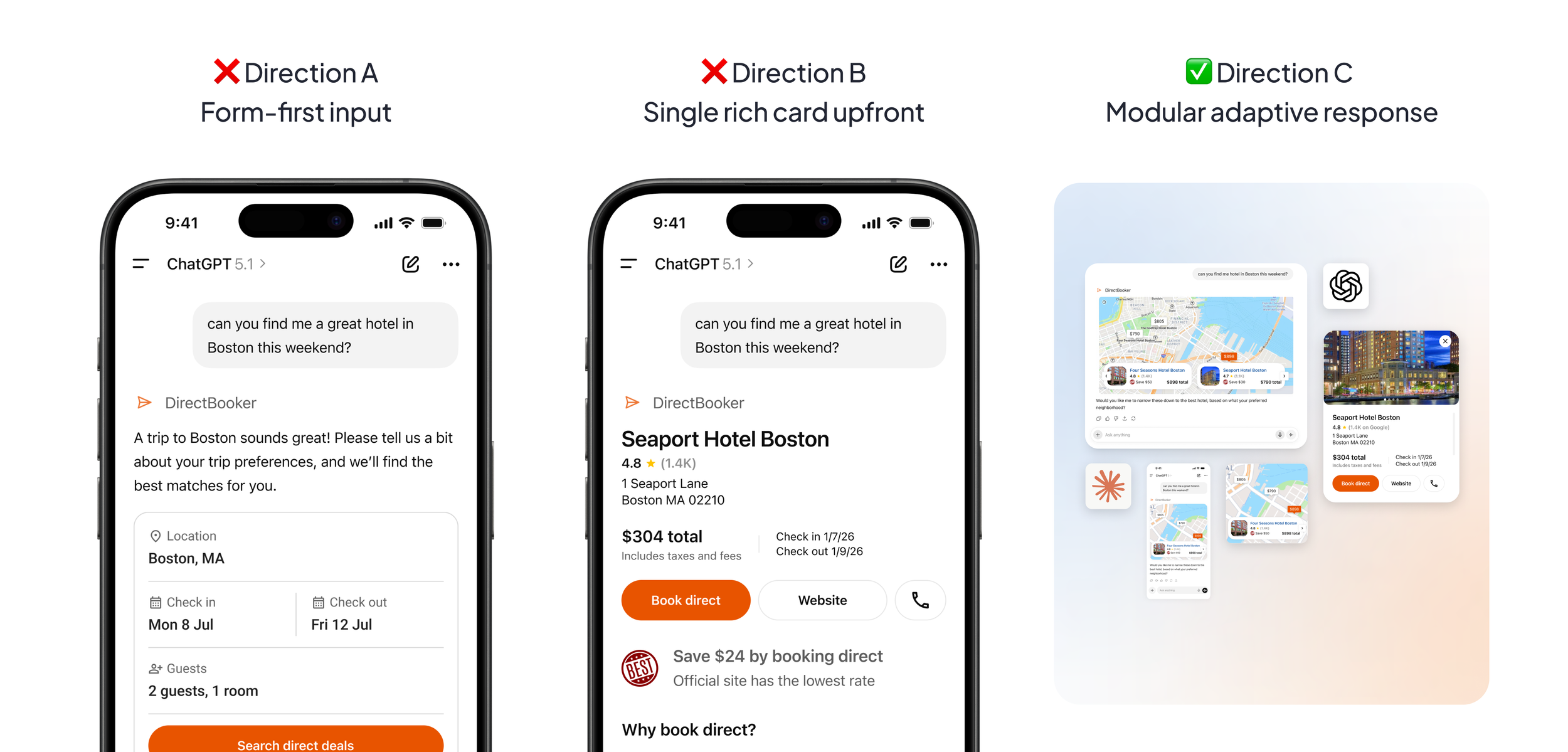
Direction C is what we finally shipped — a modular adaptive response. Instead of one fixed layout, the system assembles a response from varieties of modules based on what the user actually asked and prompt.
Multi-Module Design: built for variable LLM output
The system is composed of multiple intent-driven modules, each surfacing in response to a distinct user need. When users want to evaluate options side by side — comparing pricing, cancellation terms, and inclusions — the comparison module activates. Location-based queries trigger the map module. As users approach a booking decision and seek deeper property detail, a dedicated hotel profile module takes over.
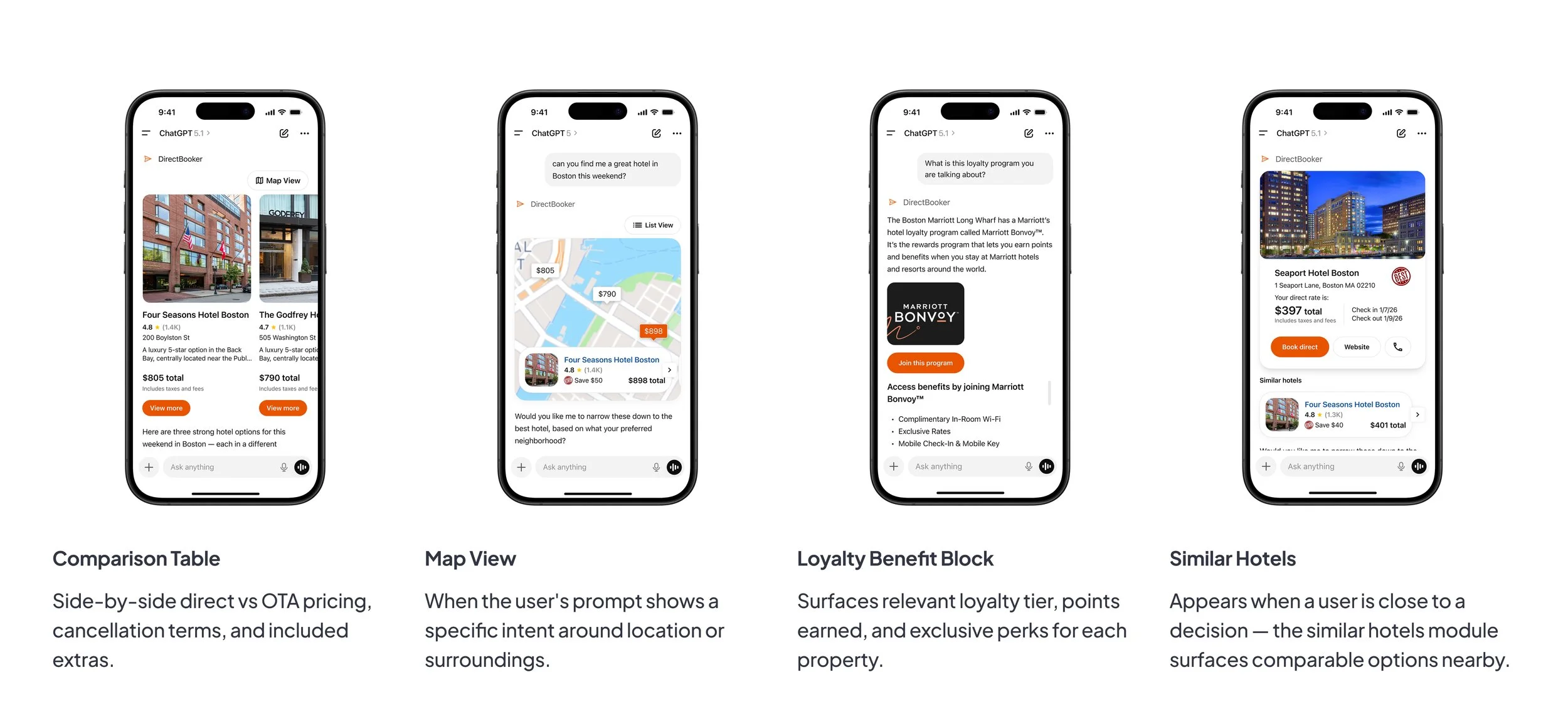
The product we shipped
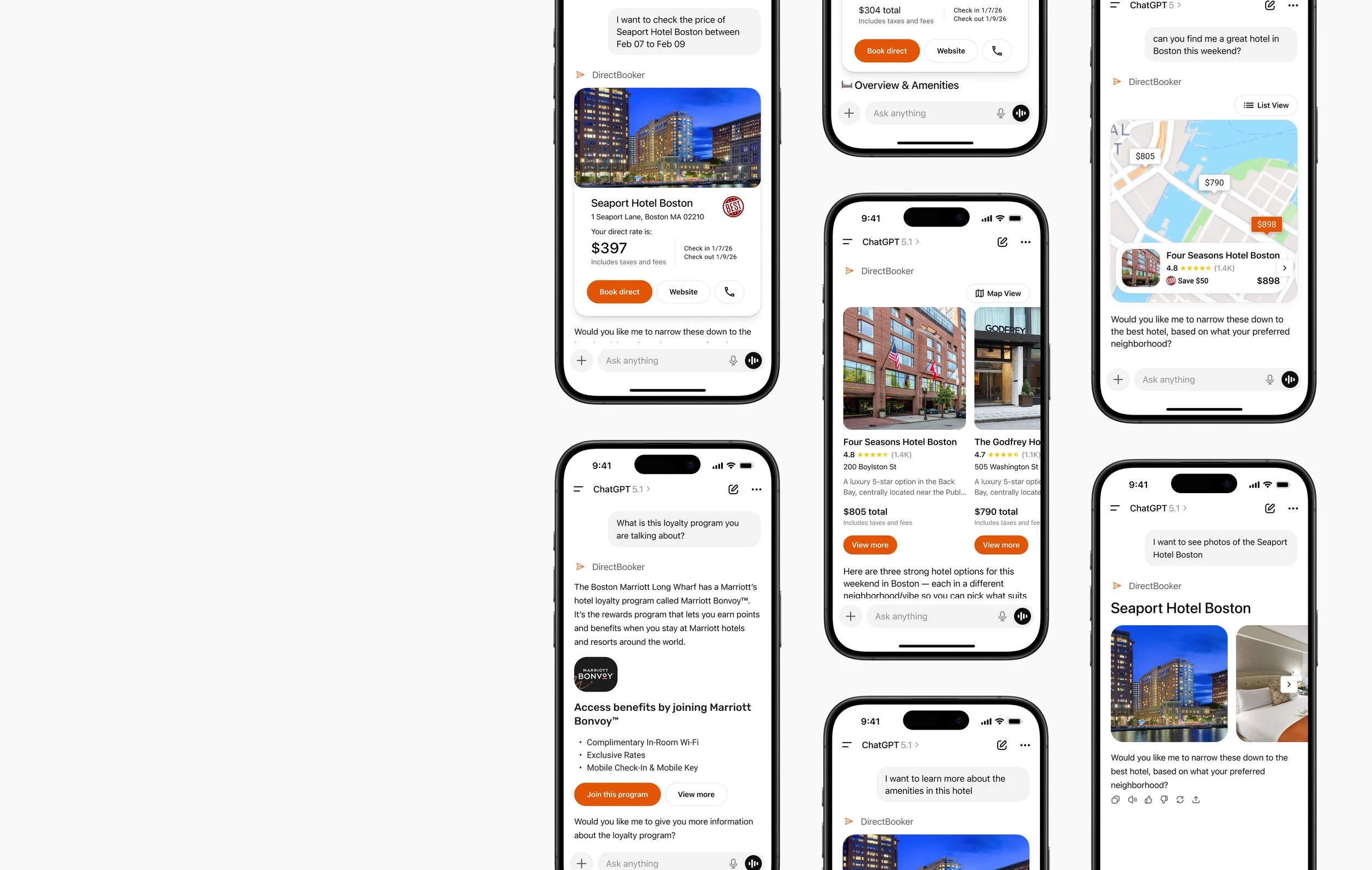
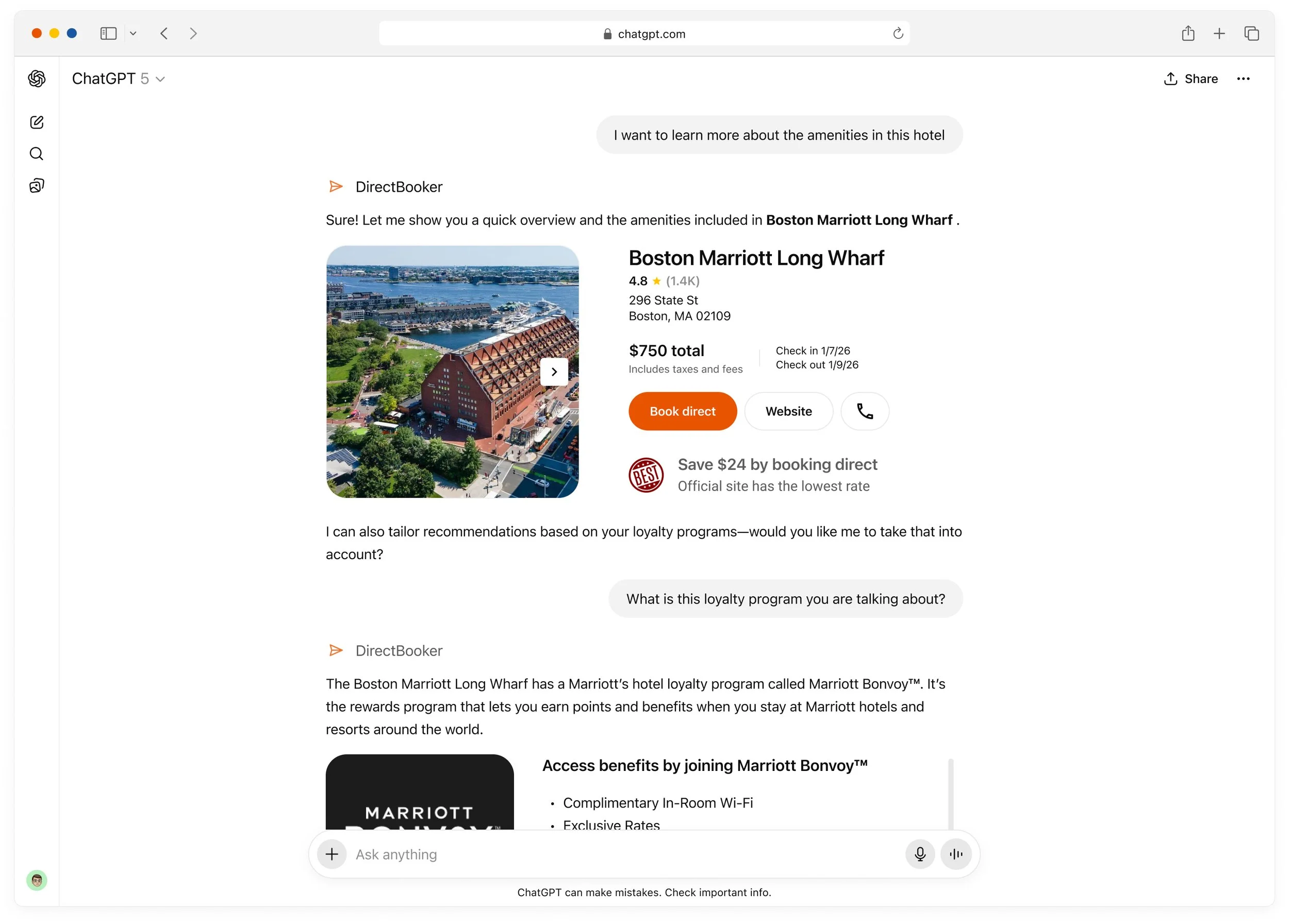
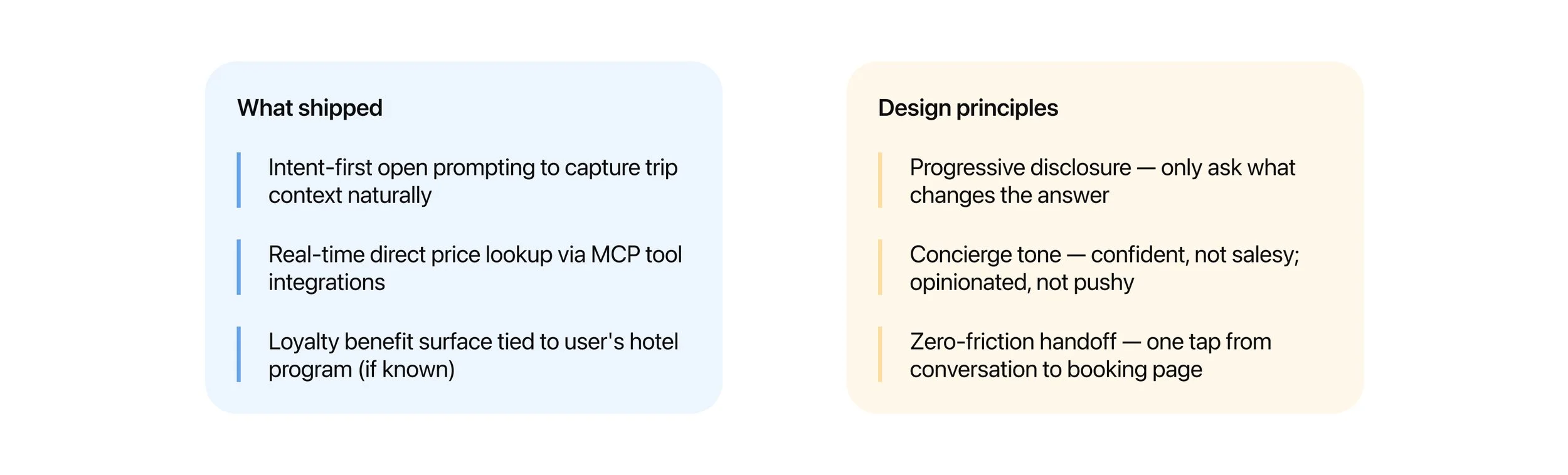
The final DirectBooker app in ChatGPT is an opinionated conversational assistant — it asks fewer questions, surfaces more relevant context, and makes direct booking feel like the obviously smarter choice.
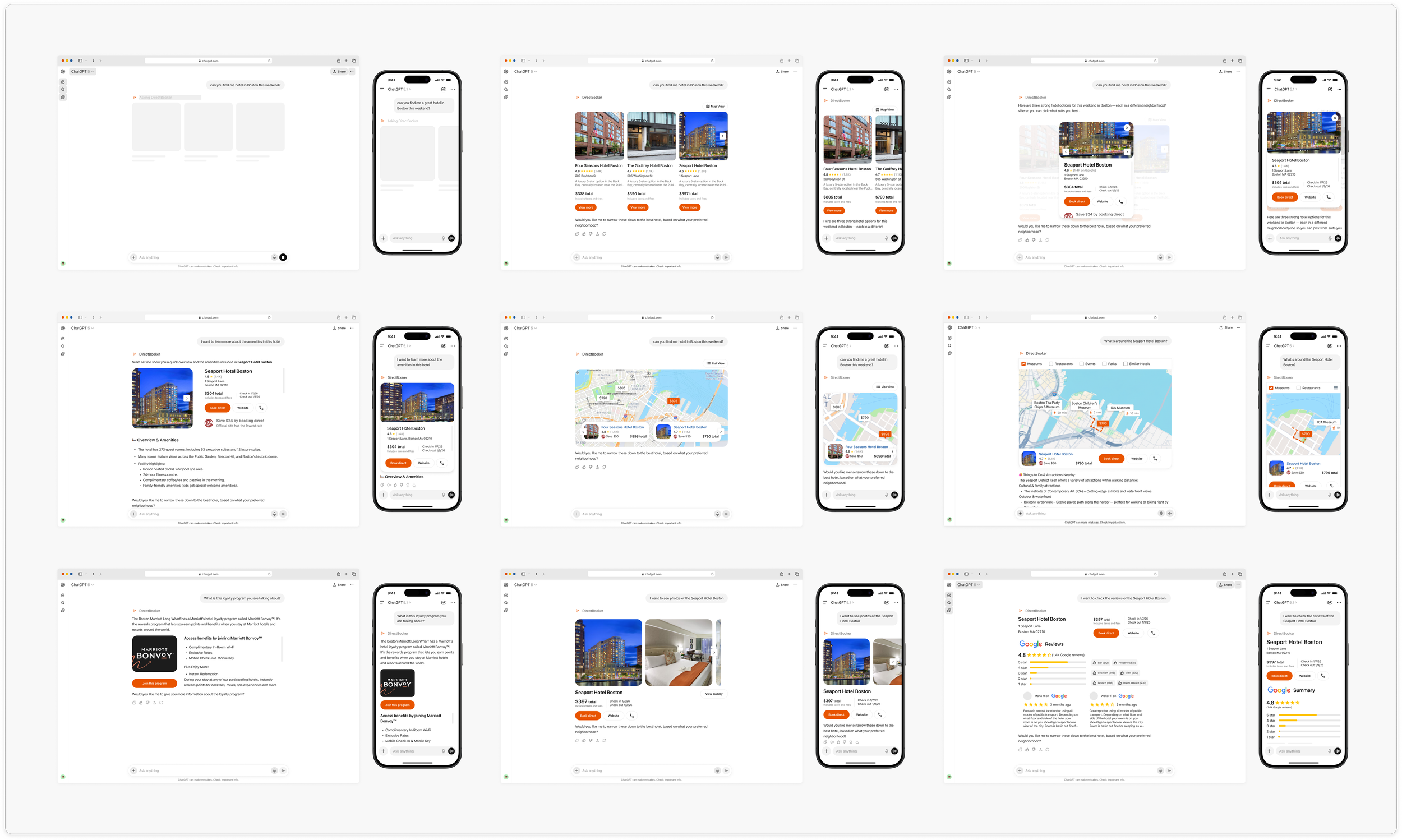
Each response is uniquely composed based on what the user actually asks — whether they want a quick price comparison, a hotel deep-dive, a map view, or loyalty benefit details, the app serves a different, purpose-built answer every time.
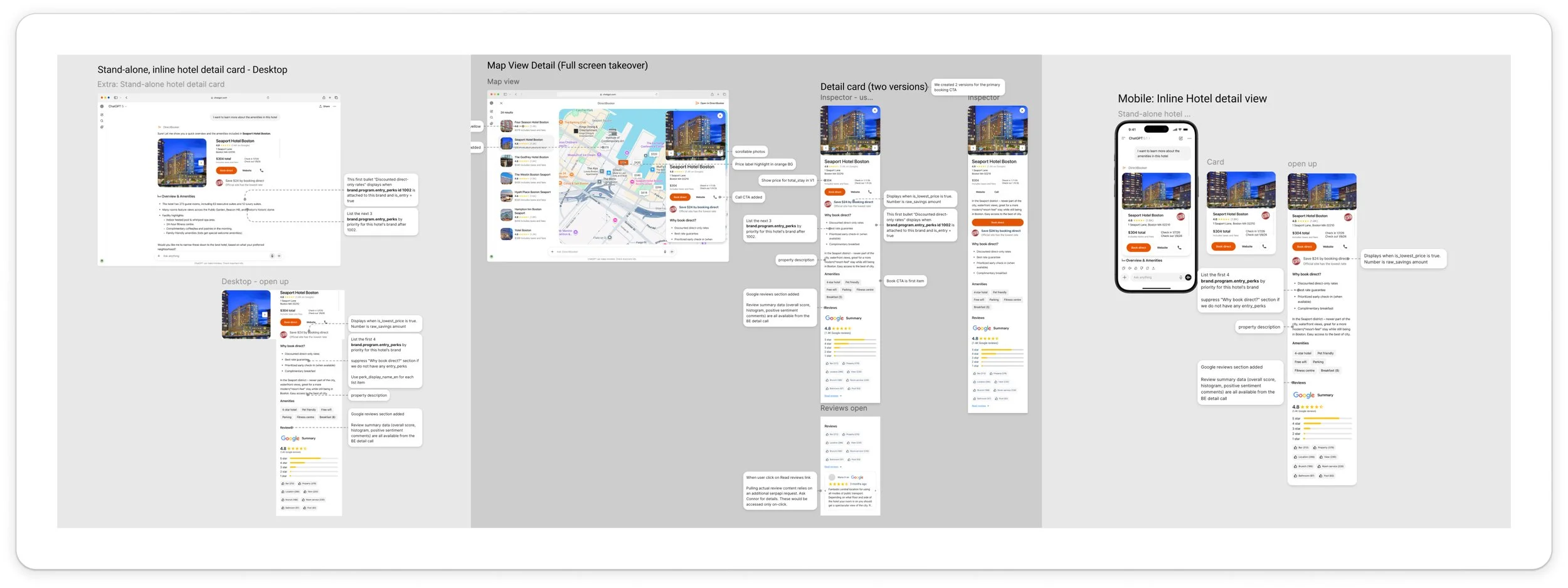
Component specs across desktop and mobile — annotated for engineering with conditional logic for price highlighting, loyalty entry points, and progressive disclosure states.